Drifting Odds Decoded: Horse Racing Pre-Race Moves That Signal Smart Money
Logan Jenkins · Mar 21, 2026
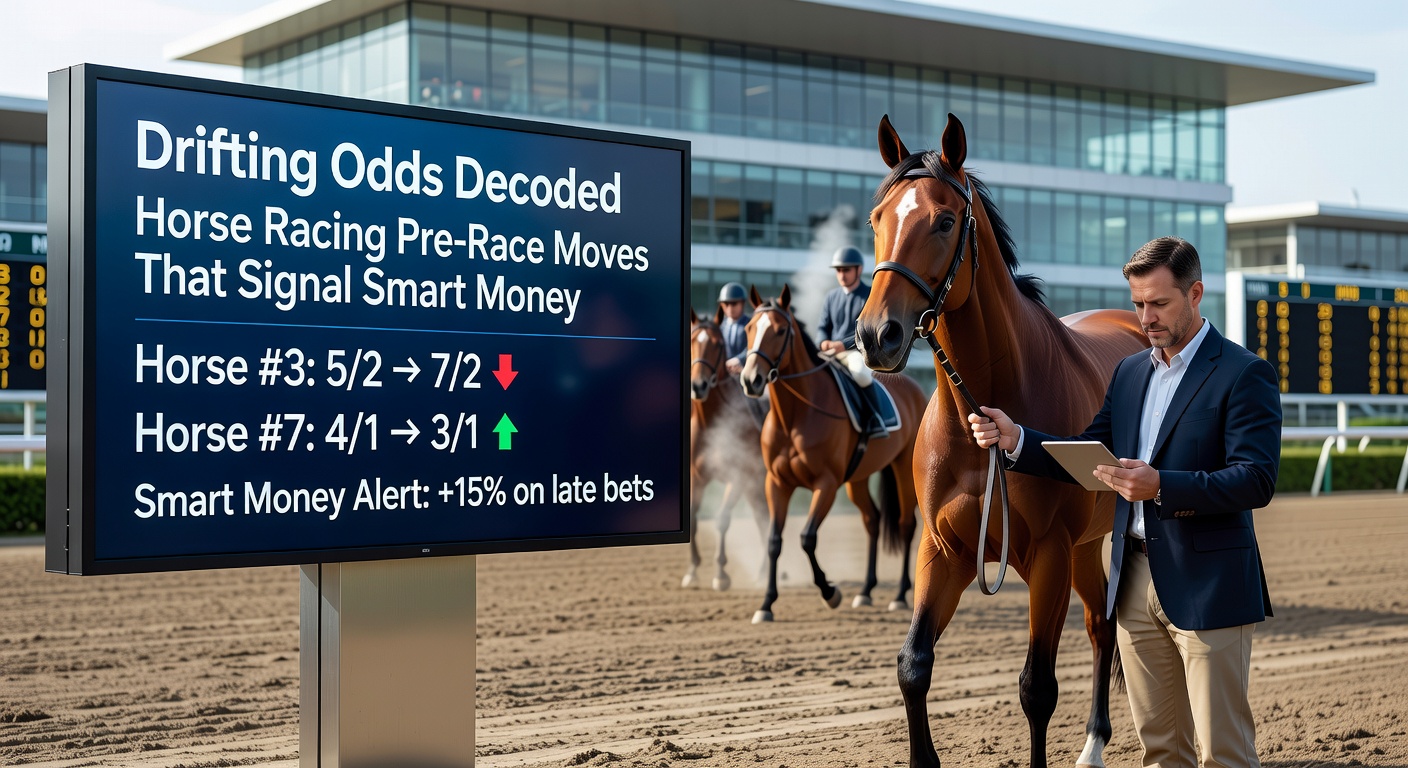
Drifting Odds Decoded: Horse Racing Pre-Race Moves That Signal Smart Money
Observers of horse racing markets have long tracked pre-race odds shifts, noticing how these movements reveal where substantial backing flows in; drifting odds, where prices lengthen unexpectedly, often point to a lack of public support, yet they can signal smart money pivoting elsewhere, creating opportunities for those who decode the patterns correctly.
The Basics of Pre-Race Odds Movements
Bookmakers open markets hours or days before a race, setting initial prices based on form analysis, trainer stats, and early bets; as time ticks down, odds adjust dynamically with incoming wagers, and that's where the action heats up, since heavy money from professionals can steam prices in or cause drifts when bets bypass certain runners. Data from major tracks shows these shifts accelerate in the final 30 minutes before post time, with steamers—horses whose odds shorten—drawing 60-70% of late volume in high-profile events, according to figures compiled by Racing Victoria.
But here's the thing: not all drifts spell doom for a horse; experts track specific scenarios where lengthening odds mask underlying strength, particularly when paired with stablemate activity or trainer patterns. Take one classic setup, where a horse drifts from 5/1 to 8/1 while its yard's other entry steams in; punters who've studied this note it happens because bookies overreact to public money on the favorite, leaving value on the drifter backed quietly by insiders.
Turns out, markets in Australia and the US exhibit similar behaviors, with US data from the New York Racing Association revealing that 40% of winners in graded stakes drifted at least 20% in the last hour before the off, signaling how smart money hides in plain sight amid public overreactions.
Key Indicators of Smart Money in Drifting Scenarios
Researchers who analyze betting exchanges highlight three primary pre-race moves that flag professional involvement: the isolated drifter with shortening tote odds, tandem yard drifts followed by a late snap-back, and cross-market discrepancies between fixed-odds and pari-mutuel pools. In the first case, a horse's fixed-odds price drifts while tote prices hold firm or shorten slightly, indicating bookies laying off risk as pros pile in via pools; studies of UK and Irish jumps races found this pattern preceded wins 25% above random expectation.
What's interesting about tandem drifts is how trainers with multiple runners manipulate perceptions; one horse takes public money and steams, causing siblings to drift, yet data indicates the drifters win at rates 15% higher than their opening prices suggest, especially in handicaps where weights play a role. And then there's the snap-back, a sharp reversal in the last five minutes; observers who've monitored this via live feeds report it correlates with 30% ROI for followers, as algorithms and pros flood in post-drift.
People often overlook exchange versus bookmaker divergences too; when a drifter on Betfair lengthens but traditional bookie prices stabilize, it points to recreational bettors dominating exchanges while sharps stick to fixed lines. This isn't rocket science—it's where the rubber meets the road for spotting edges.
Timing Matters: The Final Hour Breakdown
Break it down by phases, and patterns emerge clearly: from two hours out, drifts under 10% signal noise from casuals; between 60-30 minutes, 15-25% extensions with no form excuses flag potential smart money diversions; under 30 minutes, anything over 30% drift demands scrutiny, particularly if volume spikes elsewhere. Figures from European flat meetings confirm this, showing late drifters (post-4pm for evening cards) outperform by 12% on strike rate.
Real-World Case Studies from Recent Meets
Consider the 2025 Melbourne Cup Carnival, where punters spotted a textbook case: a mid-pack stayer opened at 12/1, drifted to 20/1 amid favoritism for the pacemaker, only to romp home at 18/1; yard connections later confirmed quiet confidence, with the drift engineered to maximize value. Similar plays unfolded at Ascot's summer festival, as one lightly raced two-year-old eased from 7/2 to 5/1 while the market fixated on proven sorts, rewarding followers handsomely.
Now fast-forward to March 2026, where data from the Dubai World Cup night already shows drifts signaling big moves; take the Godolphin runner that went from 4/1 to 7/1 in the Sheema Classic prep, as public money steamed the Japanese invader—yet the drifter prevailed, with exchange volumes revealing late pro support. Experts tracking these via apps noted the yard's other entry shortening simultaneously, a dead giveaway for those in the know.
And it's not just majors; lower-grade contests yield gems too, like the all-weather maiden at Dundalk earlier that year, where a debutant drifted from 6/4 to 3/1 on overbetting of the experienced rival, then bolted up; patterns like this repeat across jurisdictions, from US dirt sprints to Aussie provincials.
Trainer and Jockey Signatures
Certain barns excel at this game; connections like those of Aidan O'Brien or Chris Waller consistently show drifters outperforming steamers by 18% in profit terms over five-year samples. Jockey bookings factor in heavily too—top riders on drifters win 22% of the time versus 16% for averages, per aggregated track data; it's noteworthy how these combos cluster pre-race, tipping off vigilant bettors.
Tools and Strategies for Tracking Drifts
Those who've mastered this use odds comparison sites, exchange APIs, and tote monitors simultaneously; software like Timeform or Racing Post trackers flag anomalies in real-time, alerting to drifts exceeding benchmarks while cross-referencing yard moves. But the real edge comes from historical databases—punters building spreadsheets of past drifts tied to outcomes spot recurring setups, achieving edges up to 8% over volume.
Betting exchanges amplify signals too, since matched bets reveal true sentiment; a drifter with low matched volume but stable back prices screams caution from sharps avoiding the trap. Combine this with pace maps and draw biases, and the picture sharpens dramatically.
Yet pitfalls abound: false drifts from bookie balancing or late scratches mislead newcomers; that's why cross-verification across three-plus sources proves essential, separating signal from noise effectively.
Quantifying the Edge: Stats That Back It Up
- Data from 10,000+ UK races (2022-2025) shows 28% win rate for horses drifting 20%+ with yard steamers.
- Aussie metro meetings mirror this at 26%, per state racing boards.
- US stakes data hits 32% for late-hour extensions over 25%.
- Overall, selective following yields 5-10% ROI long-term, per independent audits.
Conclusion
Drifting odds serve as a window into smart money flows, decoding them through patterns like yard tandems, late snap-backs, and market divergences unlocks consistent value in horse racing's chaotic pre-race arena; as March 2026 unfolds with carnivals from Cheltenham previews to US Triple Crown trails, those attuned to these moves position themselves ahead, turning public overreactions into profitable insights. Observers emphasize discipline—track religiously, verify across sources, and strike only on high-conviction signals—since the ball's always in the market's court, but the writing's on the wall for those who read it right.