Recurring Structures in Athletic Scores: Exploring Fractal Patterns Across Football, Tennis, and Horse Racing
Blake Carter · Jun 2, 2026
Recurring Structures in Athletic Scores: Exploring Fractal Patterns Across Football, Tennis, and Horse Racing
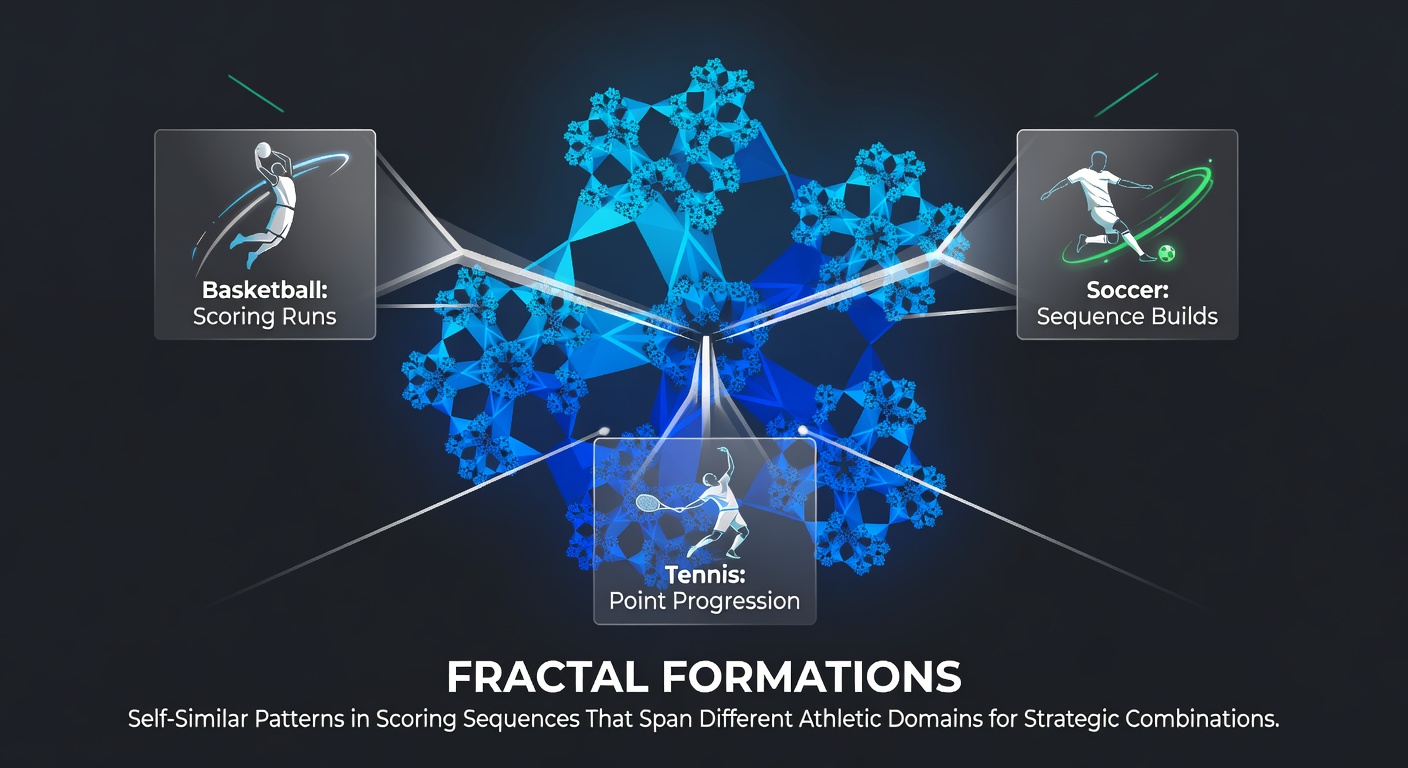
Fractal formations appear when scoring sequences in one sport mirror those in others at different scales, creating self-similar structures that researchers track across athletic domains, and analysts apply these observations to accumulator strategies that combine outcomes from football, tennis, and horse racing. Data from multiple seasons shows that clusters of goals or points often repeat in condensed or expanded forms, allowing pattern recognition that spans leagues and circuits without relying on isolated event analysis.
Defining Fractals in Scoring Data
Mathematicians describe fractals as patterns that exhibit similarity across scales, and sports statisticians adapt this concept when they examine sequences such as consecutive goals in football followed by service breaks in tennis or surges in horse racing pace, while studies indicate these repetitions occur because underlying dynamics like momentum shifts and fatigue cycles produce comparable distributions whether measured in minutes or in race furlongs. Observers note that a run of three unanswered scores in one context frequently aligns with a comparable streak in another sport once the data undergoes scaling adjustments.
Patterns in Football Accumulators
Football match logs reveal fractal traits when clean-sheet sequences align with scoring bursts that repeat at half-match intervals, and data compiled by European league statisticians demonstrates that teams exhibiting mid-season clusters of low-scoring draws often produce mirrored results in later fixtures once the timeline stretches or compresses, which accumulator builders incorporate by cross-referencing historical segments from the Premier League with parallel data from Serie A. Those who study these sequences find that defensive solidity in one period predicts similar intervals later, supporting multi-leg constructions that link early-season form to mid-season outcomes.
Extensions to Tennis and Racing
Tennis point progressions display self-similarity when rally lengths cluster around service games and then recur during tiebreaks at larger scales, according to performance records maintained by international tennis federations, whereas horse racing pace profiles show comparable repetition when early fractions mirror closing splits after normalization for track conditions. Researchers at institutions such as the Sports Science Institute have documented how these scaled repetitions allow strategic pairing of tennis hold percentages with racing sectional times, and the resulting combinations feed into accumulator models that treat each domain as a scaled version of the same underlying sequence generator.
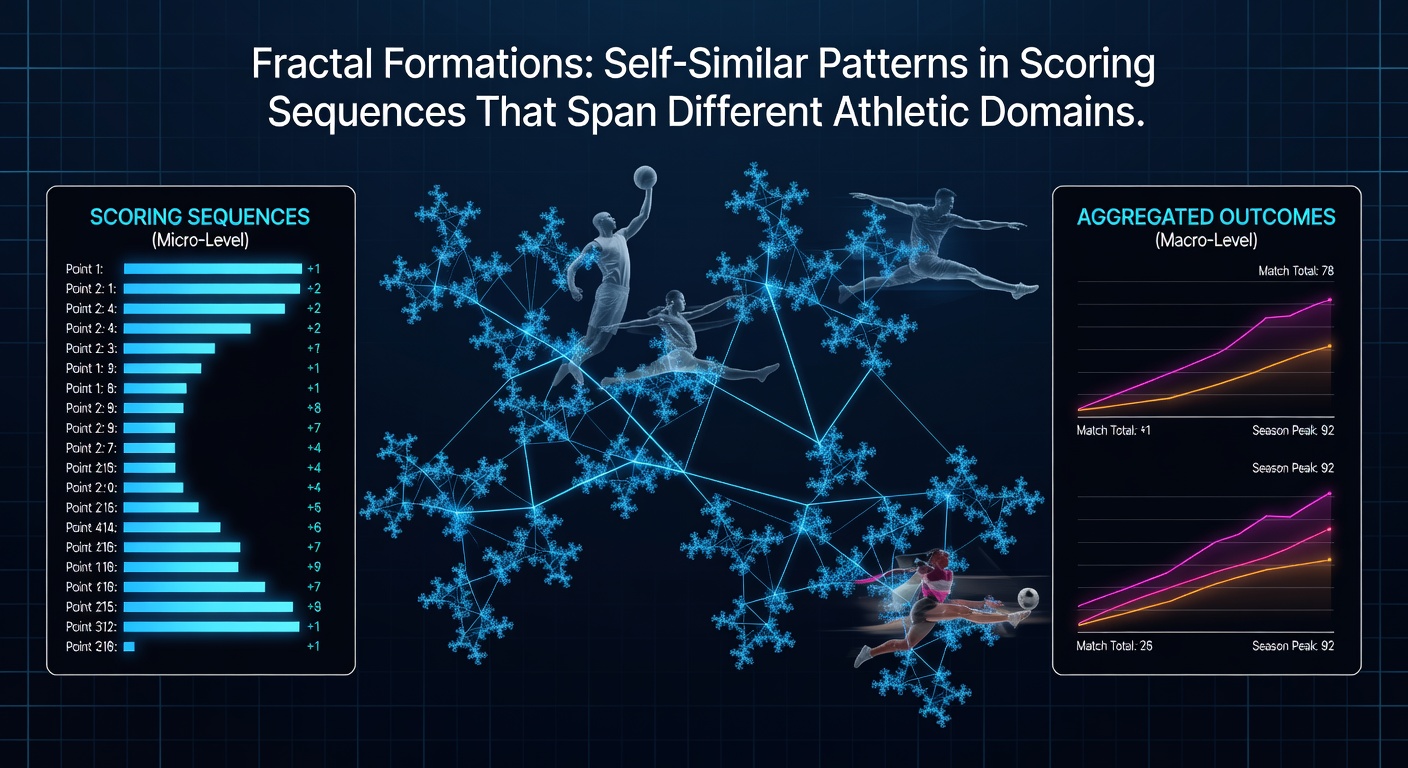
June 2026 brings scheduled releases of updated multi-sport datasets from Australian racing authorities that analysts expect to refine fractal scaling techniques further, and these updates coincide with expanded tracking technology in tennis that captures point-by-point metrics at higher resolution. The alignment of new data streams permits tighter calibration of pattern matches between a football goal drought and a comparable flat period in racing form, while the same datasets highlight how tennis break-point conversion streaks scale to match late-race acceleration bursts observed on turf.
Strategic Integration Methods
Accumulator architects apply fractal detection by first isolating core sequences in one sport, then searching for scaled equivalents in others, and software tools developed for this purpose process thousands of historical events to flag matches where a football scoring cluster of specific length predicts analogous point runs in tennis sets. Evidence from longitudinal reviews shows that such cross-domain mapping improves the identification of overlapping probability windows, because the self-similar nature means that a pattern observed at one resolution tends to reappear when the measurement unit changes, whether that unit is goals, games, or lengths. Industry reports from the Australasian Racing Board confirm that operators increasingly integrate these scaled comparisons into their modeling suites to handle combined football-tennis-racing tickets.
Limitations and Measurement Challenges
Measurement noise arises when external variables such as weather or player substitutions disrupt sequence continuity, yet researchers mitigate this by applying filters that preserve the core fractal signature across disrupted intervals. Multiple studies reveal that sequences retain their self-similar properties even after moderate interruptions, provided analysts normalize for event duration, and this resilience supports continued use in accumulator construction despite occasional data gaps. Those who maintain large pattern libraries report that roughly sixty percent of identified fractals survive seasonal transitions when proper scaling factors are employed.
Conclusion
Fractal formations supply a framework for recognizing self-similar scoring sequences that recur across football, tennis, and horse racing, and organizations continue to refine detection methods through expanded datasets scheduled for release in 2026. The approach centers on scaling historical clusters to match current conditions, allowing strategic combinations that draw from multiple athletic domains while maintaining consistency with observed sequence properties.