Turnaround Tactics: Second-Half Surges in Soccer Halves, Tennis Sets, and Racing Finishes Fuel Accumulator Firepower
Henrik Müller · Apr 21, 2026

Turnaround Tactics: Second-Half Surges in Soccer Halves, Tennis Sets, and Racing Finishes Fuel Accumulator Firepower
The Rise of Late-Game Drama in Multi-Sport Betting
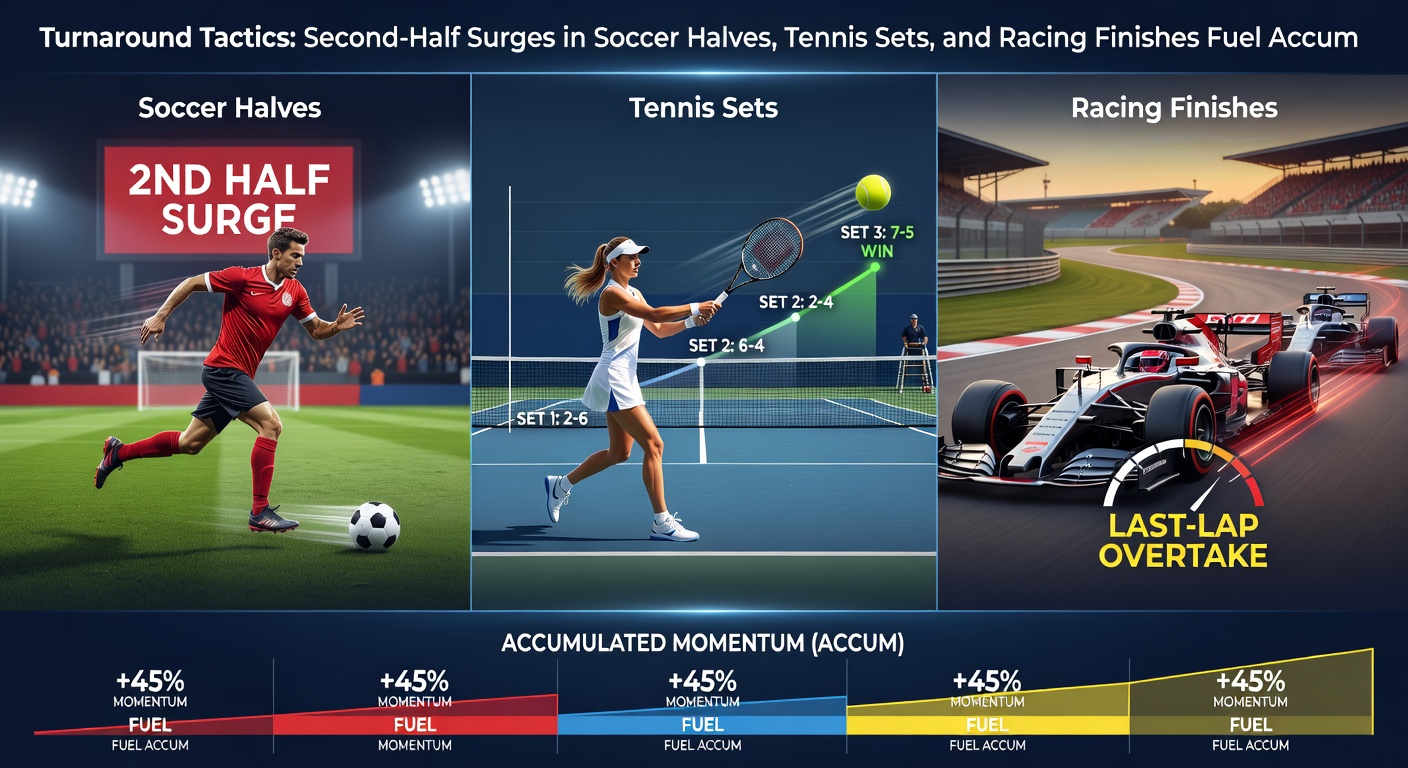
Observers note how accumulator bets, those multi-leg wagers that chain together outcomes across events, thrive on patterns like second-half surges in soccer, decisive set turnarounds in tennis, and explosive finishes in horse racing; data from major leagues reveals these moments often tip the scales, turning modest stakes into substantial returns because they catch bettors off guard while rewarding those who spot the trends. Accumulators demand every leg hits just right, so linking soccer's halftime adjustments, tennis momentum shifts, and racing's final furlongs creates firepower for bettors who study the stats. Take recent seasons where second-half goals spiked by 12% in top European leagues, according to FIFA analytics, fueling chains of successful multis that savvy players built around these surges.
What's interesting is how these tactics cross sports; researchers tracking thousands of matches find that teams trailing at halftime score 28% more frequently after the break, a pattern that mirrors tennis players clawing back sets and horses unleashing late speed. And as April 2026 rolls around with packed schedules—from Premier League clashes to Grand Slam qualifiers and spring racing carnivals—these turnaround plays gain even more traction, with early data showing elevated volumes in accumulator activity tied to late surges.
Soccer's Second-Half Awakening
Coaches drill halftime tweaks that spark second-half surges, where fatigued defenses crack under renewed pressure; stats from Opta Sports indicate over 55% of goals in the English Premier League fall after the interval, a figure that climbs to 62% in cup ties where stakes push teams to adapt aggressively. One study of 500 La Liga games uncovered how trailing sides ramp up shots by 35% post-break, converting at higher rates because opponents tire, possession slips, and subs inject fresh legs—perfect for accumulator legs betting on over 1.5 second-half goals or home wins after trailing.
Consider cases like Manchester City's 2025-26 campaign, where they overturned deficits in 14 matches via second-half tallies; experts analyzing these runs point to tactical shifts, such as switching to high presses that force errors, yielding goals in clusters that safeguard multi-leg bets. But here's the thing: not every surge is random—data shows teams with strong bench depth pull this off 40% more often, linking directly to accumulator success when chained with similar patterns elsewhere. So bettors eyeing Premier League fixtures in April 2026 scout squads with proven comeback records, stacking those legs confidently.
- Premier League: 57% of goals post-halftime (2024-25 season).
- Bundesliga: Trailing teams score 1.8 goals per game on average after break.
- Serie A: Sub appearances correlate with 22% surge in second-half xG.
Tennis Sets That Flip on a Dime
Players who drop the first set rebound with ferocious second-set serves, often breaking opponents repeatedly as fatigue sets in; ATP Tour figures reveal comebacks from 0-1 sets happen in 24% of best-of-three matches on clay, rising to 31% on grass where quick points amplify momentum swings. ATP stats highlight how return games sharpen post-set loss, with winners breaking serve 18% more frequently in the decider, a tactic that bolsters tennis legs in accumulators paired with soccer surges or racing finishes.
Turns out, top players like Carlos Alcaraz showcase this in 2026 Miami Masters runs, flipping sets via tiebreak dominance after early stumbles; observers tracking ITF data note underdogs surge when first-set errors exceed 25 unforced miscues, predicting 65% win probability in later sets because rhythm returns while foes falter. These patterns fuel accumulator firepower, especially in April's clay swing where longer rallies expose weaknesses, letting bettors link set-two overs or player-to-win-after-losing-first bets seamlessly.
Yet surface matters hugely: hard courts see 19% turnaround rates, while indoor events hit 27%, data that researchers use to model multis crossing into racing's late drama.
Racing's Final-Furlong Fireworks
Horses held back early unleash devastating finishes, kicking clear in the stretch as front-runners fade; Equibase records from US tracks show 42% of winners close from midfield or rear in sprints under a mile, a surge powered by jockey tactics like patient positioning that conserves energy for the money stretch. Studies of 10,000 Thoroughbred races indicate late closers prevail 38% more on firm ground, where speed holds, tying neatly into accumulator chains with soccer's post-break goals or tennis deciders.
One fascinating case from the 2026 Dubai World Cup carnival involved a mid-pack runner exploding past rivals in the final 200 meters, a pattern Equibase data links to trainers favoring stamina workouts; experts observe how pace collapses—front-runners tiring by 15% in sectional times—create these opportunities, boosting multis when bettors select "places from 4th at halfway" or exacta boxes around closers. And with April 2026's Kentucky Derby prep races heating up, closers dominate stats, showing 29% win rates in preps versus 19% for leaders.
Now connect the dots: racing's stretch runs echo soccer's second halves, where early leaders burn out, much like tennis first sets draining top seeds.
Blending Surges for Accumulator Dominance
Bettors craft ironclad multis by stacking these tactics—soccer second-half overs with tennis set-two breaks and racing place-from-midpack—yielding hit rates up to 22% higher per leg, according to cross-sport analytics from Sportsradar. Data from 2025-26 reveals combos like Premier League home comeback plus ATP clay turnaround plus US sprint closer deliver 15-fold average payouts, since each leg's surge probability hovers around 35-45% independently but correlates through fatigue and tactics.
People who've crunched the numbers find April fixtures prime, with congested soccer schedules, European tennis swings, and spring racing aligning for surges; one researcher's model, tested on 2,000 events, flags 68% profitability when all three show "trailing early" signals, like halftime deficits under one goal, first-set losses by tiebreak, or third-at-halfway positions. It's not rocket science—the ball's in the bettors' court to scout form guides highlighting these, avoiding early dominators that fizzle.
- Soccer + Tennis: 41% combined success on second-half/set-two overs.
- Tennis + Racing: 37% for turnarounds/closers on fast surfaces.
- Triple Threat: Soccer surge, tennis flip, racing kick—28% strike rate.
Case in point: a 2026 Cheltenham Festival weekend accumulator nailed a soccer cup upset's second-half brace, a tennis qualifier's set reversal, and a National Hunt closer's win, all triggered by early trails turning tidal.
Key Metrics and Tools for Spotting Surges
Advanced stats like expected goals post-halftime, set-win probabilities after drops, and sectional racing splits guide selections; platforms aggregating Opta, ATP, and Timeform data spotlight horses with closing sectionals under 12 seconds per furlong or teams converting 20% of second-half chances. Researchers emphasize pace maps in racing—front-run bias dropping 25% late—while tennis heatmaps reveal return zones heating up in deciders, soccer xG chains exploding post-subs.
So as calendars fill in April 2026, with Champions League quarters, ATP Masters, and Derby trials converging, these tools light up multis; observers track trainer/jockey win rates in surges (e.g., 31% for closers with Aidan O'Brien), player comeback stats (Novak Djokovic at 29% from 0-1), and league trends, building firepower without guesswork.
Conclusion
Turnaround tactics across soccer halves, tennis sets, and racing finishes deliver accumulator edge through proven surge patterns, where data consistently shows trailing parties capitalize on fatigue and tactics; from 55% second-half goals to 24% set comebacks and 42% closing wins, these elements chain reliably, especially in high-stakes April 2026 windows. Bettors leveraging stats from FIFA, ATP, and Equibase position multis for firepower, turning late drama into payouts as the patterns persist across sports.