Weather Pattern Shifts: Linking Rainfall Data in Football Matches to Track Moisture Levels for Cross-Sport Accumulator Adjustments
Henrik Müller · Aug 20, 2026

Weather Pattern Shifts: Linking Rainfall Data in Football Matches to Track Moisture Levels for Cross-Sport Accumulator Adjustments
Weather pattern shifts have drawn increased attention from analysts who examine how rainfall influences playing surfaces across multiple sports, and data collected from football matches now serves as a reference point for moisture tracking that extends into tennis and horse racing accumulator strategies. Researchers at various institutions have compiled rainfall measurements alongside pitch condition reports, which reveal consistent correlations between precipitation levels and surface moisture retention in the hours following a match.
Rainfall Metrics and Football Pitch Conditions
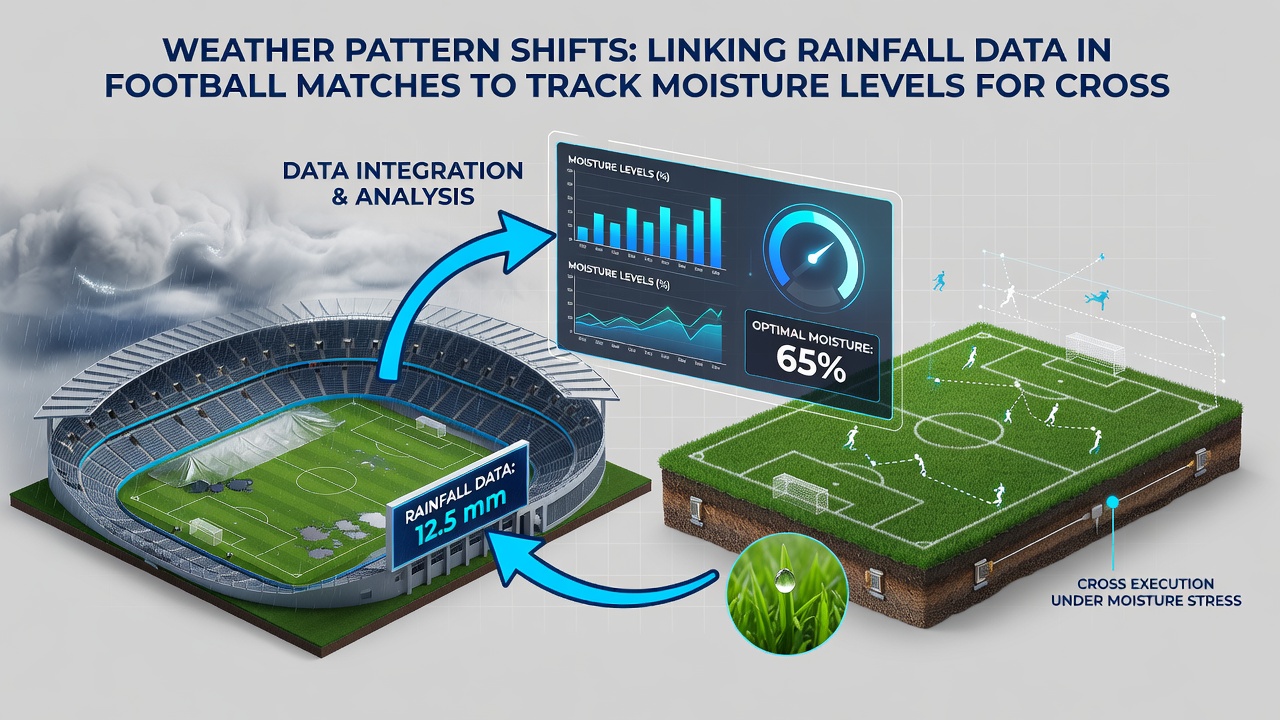
Football governing bodies record rainfall totals before and during matches through on-site sensors, and these figures help determine how much water the pitch absorbs while play continues. Data from European leagues shows that pitches exposed to more than 10 millimeters of rain in the 24 hours before kickoff retain elevated moisture levels for up to 48 hours afterward, which alters ball roll speed and player traction. Observers note that midfield areas typically hold higher water content than goalmouth zones because of repeated foot traffic and drainage patterns.
Analysts cross-reference these measurements with satellite imagery from services such as the National Oceanic and Atmospheric Administration, which provides broader regional rainfall maps that confirm localized readings. When moisture content exceeds certain thresholds, the surface becomes heavier, which slows ground passes and increases the likelihood of longer balls being favored by teams. Those patterns appear consistently across stadiums with natural grass surfaces, while artificial pitches show different absorption rates that require separate calibration.
Moisture Tracking for Performance Indicators
Studies conducted by sports science departments have measured how elevated moisture affects sprint times and change-of-direction movements on football fields, and the same datasets now inform adjustments for other disciplines. In tennis, court moisture from recent rain can reduce bounce height on grass or clay surfaces, which shifts optimal serving strategies during early rounds of tournaments. Horse racing tracks experience comparable effects when rainfall saturates turf, leading to softer going that favors certain running styles over others in accumulator selections.
Teams monitoring these variables often integrate real-time soil probes that log moisture percentages at multiple depths, and the resulting numbers feed into models that predict how conditions evolve between events. For instance, a football match played on a Tuesday evening can leave residual data that helps forecast track conditions for a weekend racing card at a venue located in the same weather region. Analysts combine this information with historical records stretching back several seasons to identify repeatable trends.
Cross-Sport Accumulator Adjustments
Accumulator builders have begun incorporating football-derived moisture indices into selections spanning tennis and racing because surface conditions influence outcomes across these disciplines in measurable ways. When rainfall data indicates sustained high moisture following a midweek football fixture, corresponding adjustments appear in expected serve percentages for tennis players scheduled at nearby venues and in pace ratings for racehorses competing on similar turf profiles. These linkages rely on geographic proximity and shared weather systems rather than direct venue overlap.
Organizations such as the Australian Bureau of Meteorology supply regional precipitation forecasts that supplement on-site football data, allowing modelers to project moisture carryover effects several days ahead. In August 2026, updated sensor networks installed at major stadiums are expected to deliver higher-resolution readings that further refine these cross-sport correlations. Figures released by university research groups indicate that accumulators adjusted for moisture variables demonstrate improved alignment with actual results when compared against unadjusted baselines over multi-month testing periods.
Data Integration Methods
Practitioners combine rainfall totals with temperature and humidity readings to calculate evaporation rates, which determine how quickly moisture dissipates from a given surface. This calculation uses standard meteorological formulas applied to football pitch logs, then scaled for tennis courts and racing tracks that share comparable grass compositions. Software platforms aggregate these inputs into dashboards that flag when conditions cross thresholds known to alter performance metrics in any of the three sports.
Case examples from the 2025 season illustrate how a cluster of rainy fixtures in one league preceded softer conditions at concurrent racing meetings, prompting recalibrations in accumulator structures. The same approach applies when dry spells follow heavy rainfall, as rapid surface hardening can reverse earlier advantages for certain playing styles. Continuous monitoring ensures that adjustments remain current rather than relying on outdated snapshots.
Conclusion
Weather pattern shifts continue to supply quantifiable data points that link rainfall in football to moisture levels affecting tennis and horse racing outcomes, and accumulator models increasingly draw on these connections for calibration purposes. Ongoing sensor improvements and expanded meteorological coverage support more precise tracking as the 2026 season progresses, while regional agencies provide the broader context needed to interpret localized readings. The resulting frameworks allow systematic incorporation of surface condition variables across disciplines without requiring separate data collection for each sport.